
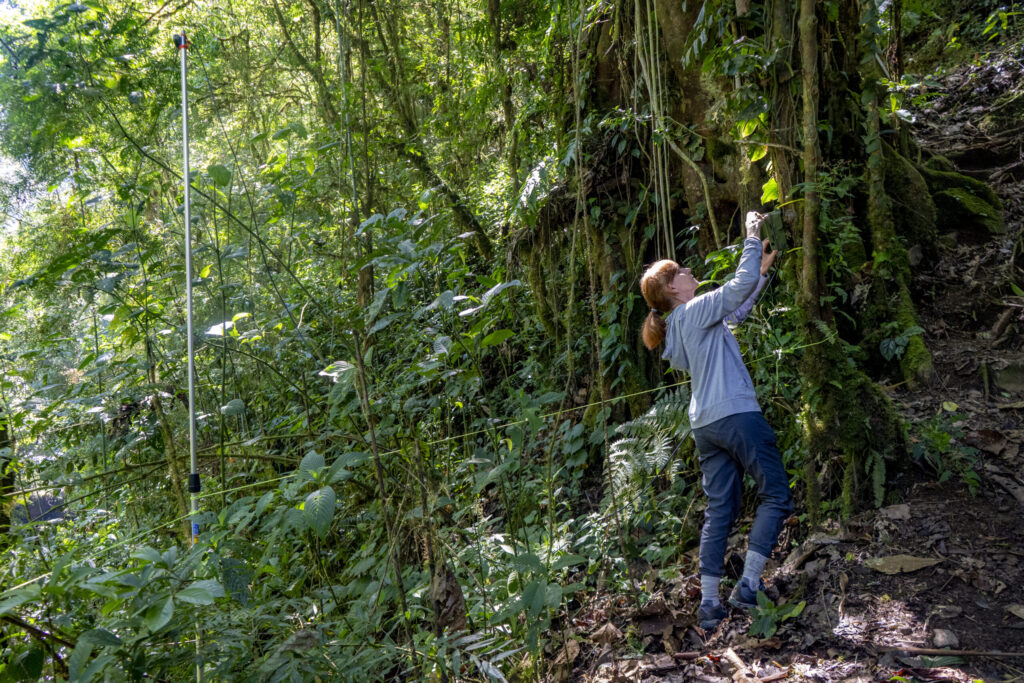
At Cloudbridge, understanding the wildlife that inhabits the cloud forest is a fundamental part of protecting it. This month, we are excited to share a new research project focused on one of the reserve’s most elusive and fascinating groups of animals: bats.
Together with bat researcher Doris Audet, Cloudbridge has started a project aimed at identifying the bat species present in the reserve through acoustic monitoring, a technique that records and analyzes bat echolocation calls. But how does this process actually work in the field?
The first step is selecting the recording locations. Before going into the forest, different points are chosen on a map to make sure we cover a variety of habitats across the reserve, including different elevations, forest types, and levels of vegetation cover. This helps researchers better understand which bat species are using different parts of the cloud forest.
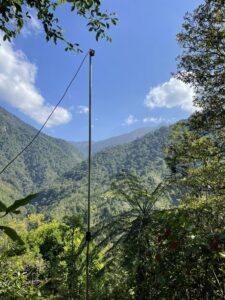
Once in the field, the team carries the recording equipment to each selected site. At every location, a specialized ultrasonic microphone is mounted on a pole about three meters above the ground. Raising the microphone helps improve the quality of the recordings and allows it to better capture the calls of bats flying through the forest.
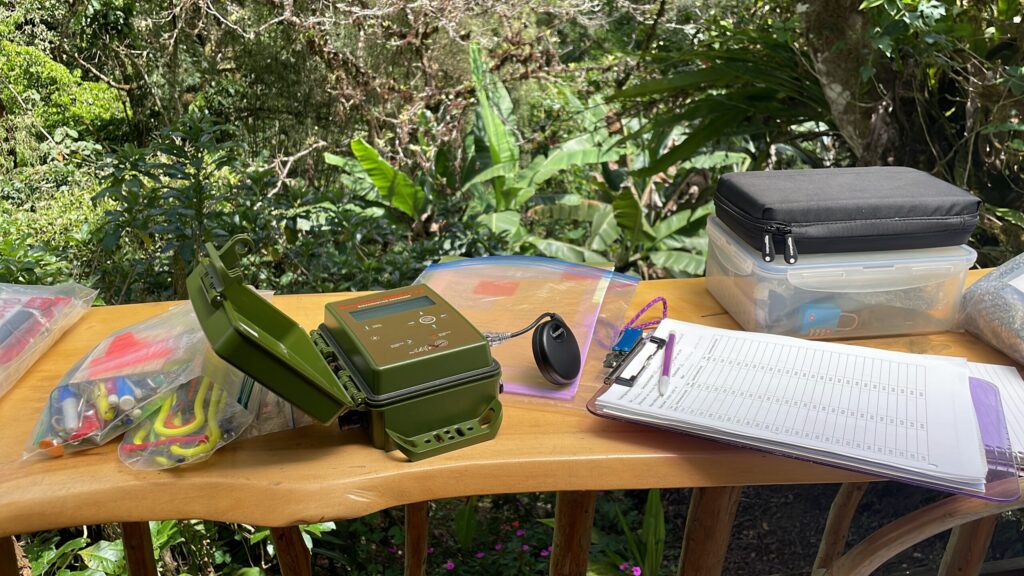
The microphone is connected to an acoustic recorder, which is carefully programmed before being left in place. The recorder is set to begin working shortly before sunset and continue recording until shortly after sunrise, when bats are most active. It is also adjusted to record only the ultrasonic frequencies used by bats, filtering out many other forest sounds.
The equipment then remains in the same location for two nights, recording continuously throughout the night. On the third day, the recorder is moved to another preselected site, allowing the project to sample many different areas of the reserve over time.
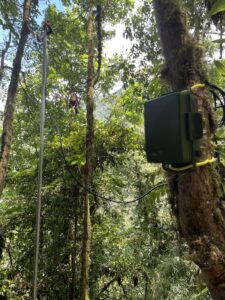
One of the greatest advantages of this technique is that it is completely passive and non-invasive. The bats do not need to be captured, handled, or disturbed in any way. The detectors simply record the sounds naturally produced by bats as they move through the forest. Because the equipment records all night long, researchers can also collect much more information than during a short field survey. Acoustic monitoring is especially useful in cloud forests because it can detect bats flying at different levels of the forest, from the understory close to the ground to the upper canopy, areas that are often difficult to study using traditional methods.
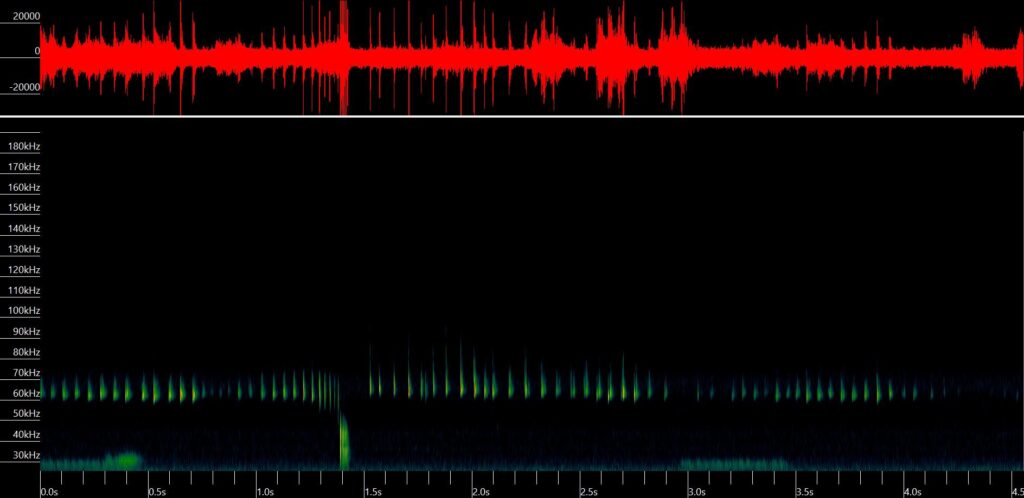
However, collecting the recordings is only the beginning of the process. After the equipment is retrieved, the data must be carefully processed using specialized software that searches through the recordings for recognizable bat calls. The software can visualize the calls and measure characteristics such as their frequency, duration, and pattern.
This final step requires extensive experience and expert knowledge. Many bat species produce calls that can sound very similar, while environmental noise, rain, insects, or overlapping sounds can make analysis even more challenging. Specialists like Doris Audet are therefore essential to the project. Through her expertise, Doris can interpret the patterns and frequencies of the calls and determine which species produced them.
This research sounds fascinating and I’m looking forward to reading more about your discoveries. I’m curious – are these bats migratory, or do they tend to stay at Cloudbridge?