
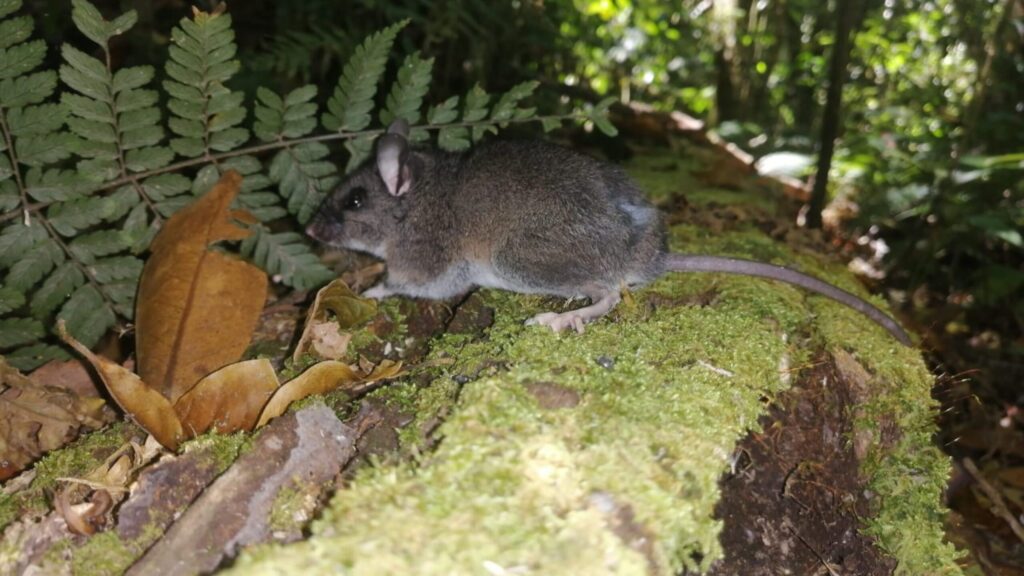
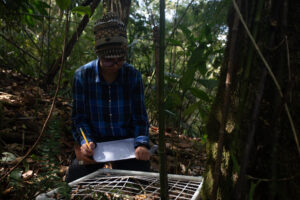
When most people think about Costa Rica’s wildlife, they imagine colorful birds, monkeys swinging through the canopy, or perhaps even elusive wild cats. Yet hidden beneath the forest vegetation lives an equally important group of animals that often goes unnoticed: rodents. Although small and rarely seen, these mammals play a fundamental role in maintaining healthy forest ecosystems, dispersing seeds, recycling nutrients, and providing food for many other species. Thanks to a recent study conducted at Cloudbridge Nature Reserve by Costa Rican researcher Rebeca Jiménez-Gómez, we now have a much better understanding of how these remarkable animals are distributed across Cloudbridge’s mountain forests.
In 2023, Rebeca spent several months at Cloudbridge Nature Reserve conducting fieldwork for her Licenciatura thesis at the Universidad Nacional de Costa Rica. Working through both the dry season, from February to March, and the rainy season, from June to July, she investigated how rodent communities change across the reserve’s elevational gradient. Since completing this research, Rebeca has graduated with honours, and her work has now been published in the scientific journal Therya. Her study not only revealed fascinating patterns about the small mammals that inhabit the cloud forest, but also highlighted the importance of supporting Costa Rican scientists who are helping us better understand and protect the country’s extraordinary biodiversity.
Cloudbridge provided an ideal setting for this research, as the reserve spans a wide range of elevations and habitats while remaining connected to the vast forests of Chirripó National Park. This natural variation creates a living laboratory where scientists can study how wildlife responds to changes in environmental conditions. To carry out the study, Rebeca surveyed rodents at three different elevations within the reserve: 1,600, 1,800, and 2,000 meters above sea level. Alongside trapping rodents, she carefully documented habitat characteristics such as vegetation density, fallen logs, leaf litter, rocks, and tree cover, allowing her to better understand the factors influencing where different species occur.
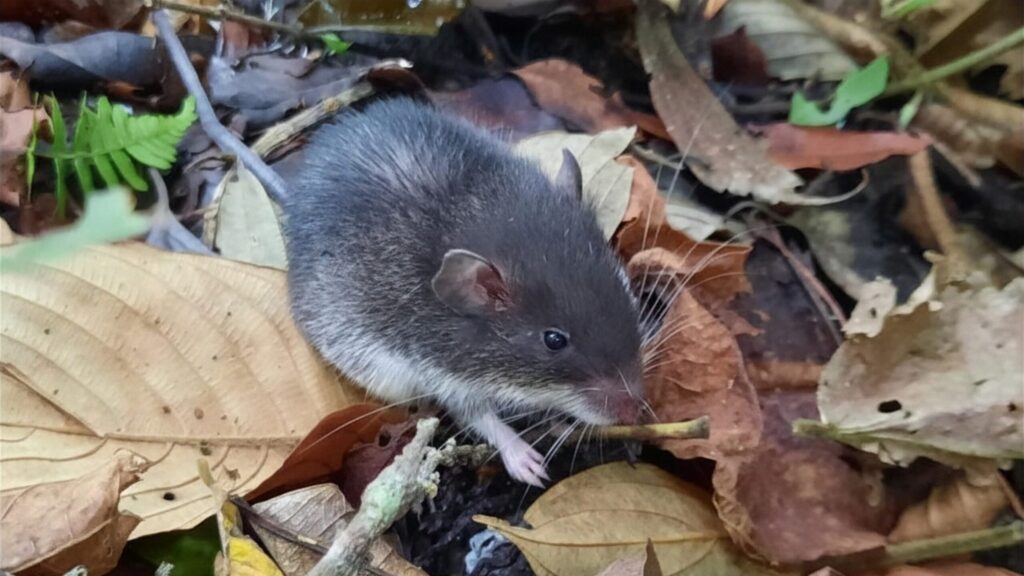
After more than 2,100 trap-nights of fieldwork, Rebeca recorded 200 individual rodents belonging to nine different species. Among these were three species found only in the Talamanca mountain range of Costa Rica and Panama, highlighting the unique biodiversity that these high-elevation forests support. One of the most interesting discoveries was that rodent diversity changed significantly with elevation. Lower areas of the reserve supported a greater variety of species, while higher elevations were dominated by fewer species, particularly the Talamanca deer mouse (Peromyscus nudipes), which was by far the most commonly captured species.
The study also found that rodent communities changed with the seasons. More rodents were captured during the rainy season, when the forest becomes denser and provides greater shelter and food availability. However, the research revealed that elevation alone does not determine where rodents live. Instead, it is the habitat conditions associated with different elevations that appear to be most important. Features such as dense understory vegetation, fallen logs, rocks, and leaf litter provide rodents with protection from predators and access to food resources. Areas containing these characteristics tended to support a greater diversity of species, demonstrating how even small details within the forest can have a major influence on wildlife communities.
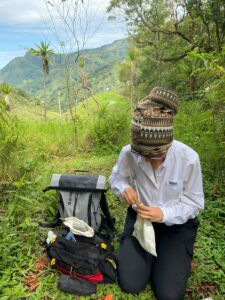
These findings are particularly relevant in a time of rapid environmental change. Mountain ecosystems are among the habitats most vulnerable to climate change, and many species that inhabit them have limited opportunities to move elsewhere as temperatures rise. Understanding how wildlife uses different habitats is therefore essential for developing effective conservation strategies. Studies like Rebeca’s help identify the conditions that allow species to thrive and provide valuable information for protecting biodiversity in the future.
Rebeca’s study is also a reminder of the important role that early-career Costa Rican researchers play in advancing our understanding of the country’s biodiversity. Conducting field research in remote mountain environments requires dedication, perseverance, and countless hours in the field, often under challenging weather conditions. By carrying out her thesis at Cloudbridge, Rebeca contributed valuable scientific knowledge about a group of animals that remains relatively understudied in Costa Rica. Seeing this work progress from a student research project to a published scientific article is a wonderful example of how opportunities for hands-on research can help train the next generation of conservation scientists.
Rebeca’s research demonstrates how protected areas like Cloudbridge can serve not only as refuges for wildlife but also as places where new knowledge is created. Every research project conducted at the reserve deepens our understanding of the species that call these forests home and strengthens our ability to protect them. Through the dedication of researchers like Rebeca, we continue to uncover the hidden stories of the cloud forest, proving that even some of its smallest inhabitants can teach us important lessons about the natural world and the importance of conserving these extraordinary mountain ecosystems for future generations.
For readers interested in exploring the scientific details of this research, Rebeca’s full article, Diversity of rodents in three altitudinal zones in Cloudbridge Nature Reserve, Costa Rica, is freely available online through the journal Therya. You can read the complete publication here: