
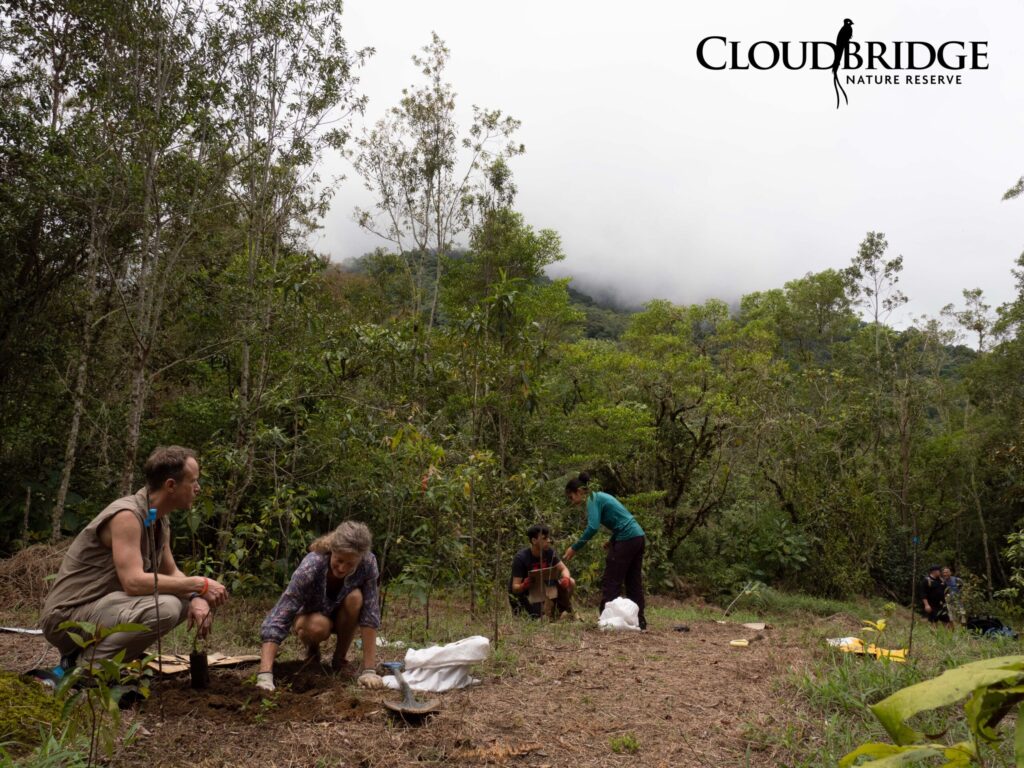
A few weeks ago, our staff and volunteers gathered to plant what will likely be the last trees needed to complete the reforestation of Cloudbridge Nature Reserve. While it may have looked like just another planting day, it marked the end of an extraordinary chapter that began more than two decades ago.
Since Cloudbridge was established in 2002, reforestation has been one of the cornerstones of our mission, alongside conservation, research, and education. When the reserve was first created, much of the land had been cleared for agriculture and cattle grazing. Although patches of forest remained, large areas were degraded and required active restoration to help the cloud forest recover.
Over the past 24 years, hundreds of volunteers, interns, researchers, staff members, and supporters from around the world have contributed to this effort. Together, they have planted thousands of native trees across the reserve while also protecting naturally regenerating areas through passive reforestation. In some locations, planting native species accelerated the recovery process; in others, simply removing human pressures allowed nature to begin healing itself.
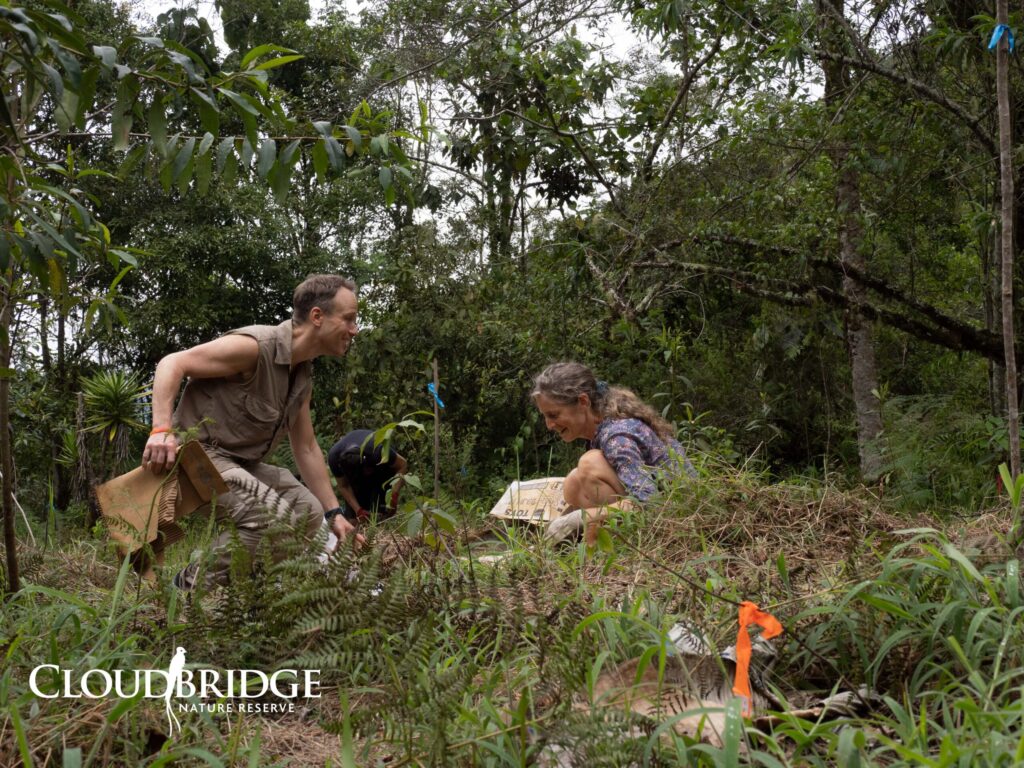
Today, visitors walking through Cloudbridge can already see the remarkable transformation. Areas that were once open pasture now support thriving young forests, providing habitat for an increasing diversity of wildlife. Mammals such as pumas, ocelots, peccaries, and pacas now move through forests that, only a few decades ago, did not exist. Birdlife has flourished, countless insects have returned, and the recovering forest continues to reconnect fragmented habitats along the buffer zone of Chirripó National Park.
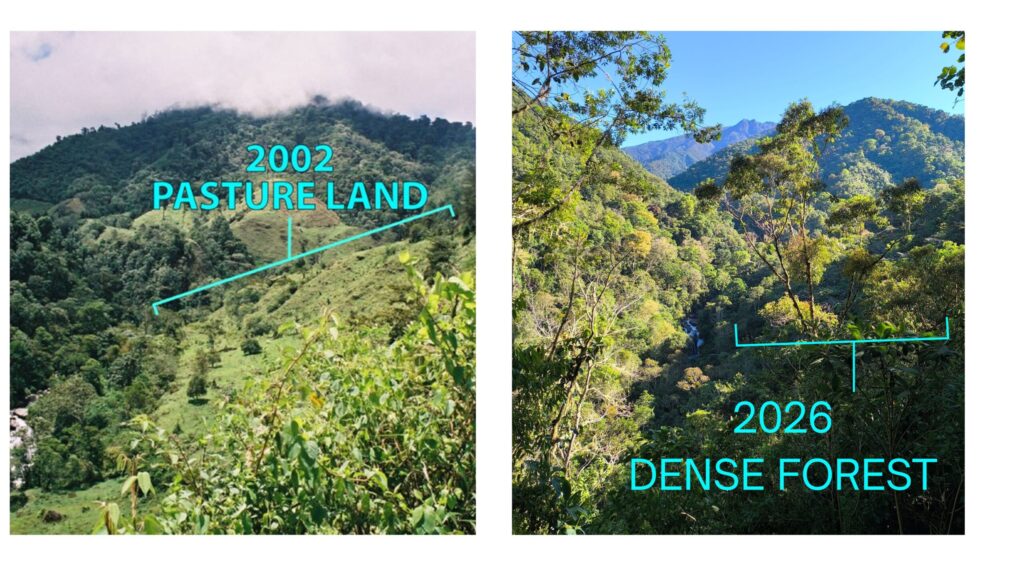
The final planting took place on one of the most recently acquired properties within the reserve. With these last trees in the ground, every area requiring active restoration has now been planted. Although this marks the completion of one phase of Cloudbridge’s history, it is by no means the end of our work. A cloud forest takes decades, even centuries, to fully recover, and our role is now to protect these regenerating forests and allow nature to continue its course.
With the reforestation phase complete, Cloudbridge will focus on the other pillars of our mission: conservation, by safeguarding these forests for future generations; research, by studying one of the world’s least understood ecosystems and improving our understanding of forest recovery; and education, by inspiring people to appreciate and protect the natural world.
Twenty-four years ago, the vision was to transform degraded farmland into thriving cloud forest. Today, that vision has become a reality. The challenge now is to protect, study, and share this remarkable ecosystem so it can continue to flourish for generations to come.
To everyone who has planted a tree, volunteered, donated, conducted research, or supported Cloudbridge over the past 24 years—thank you. This forest is your legacy as much as it is ours.
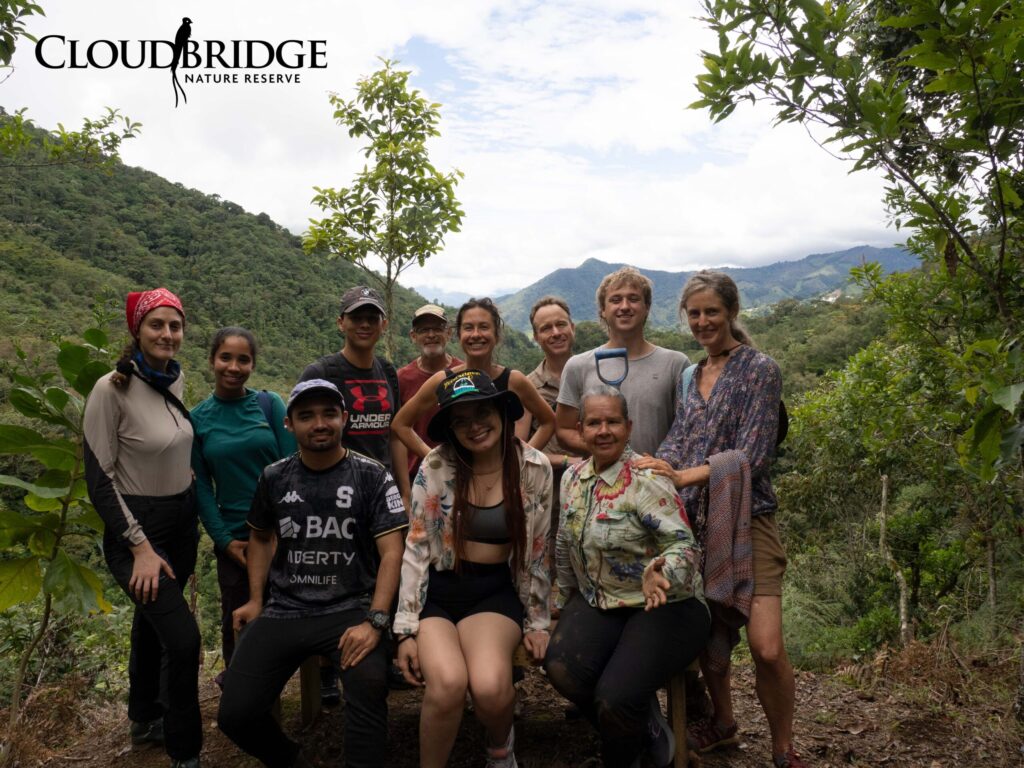
What a wonderful milestone!
I feel so proud! I was a small part of this project literally 20 years ago! Today, I’m a park ranger, and if you look at my ranger bio posted at the parks, under “favorite place,” you’ll see Cloudbridge Nature Reserve, Costa Rica! Wonderful work, wonderful legacy, all. I’m planning a trip out there again, with my husband, who I met 30 years ago in San Gerardo, and nieces and sisters.
What an awesome accomplishment!