
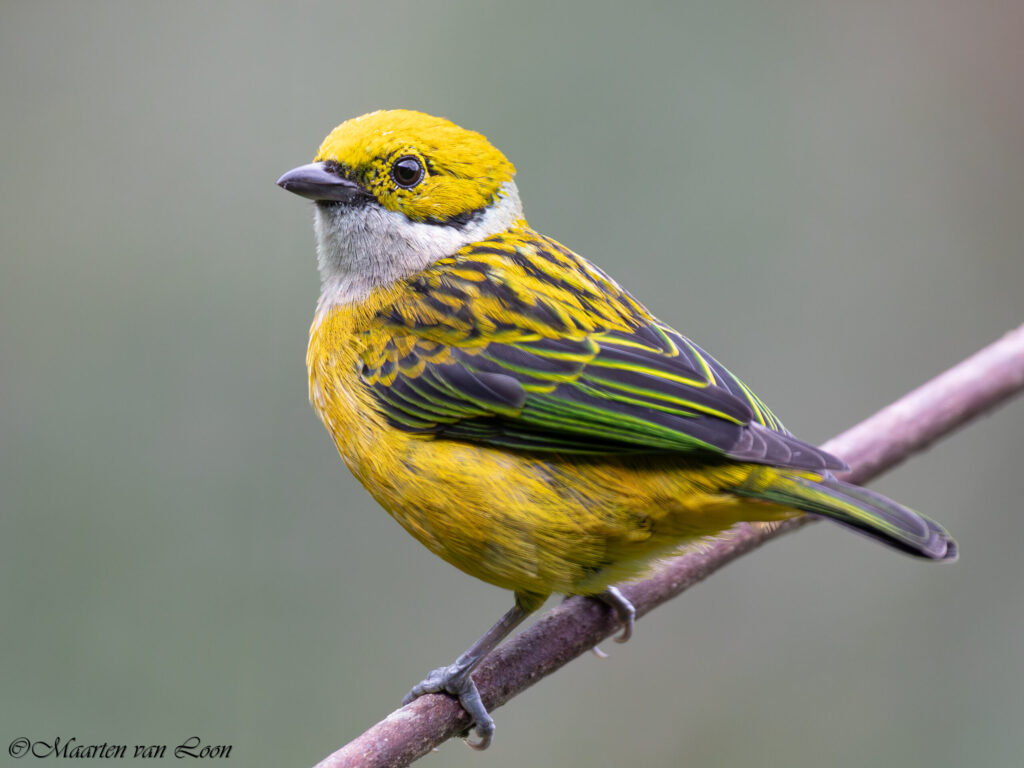
When we think about forest restoration, it is easy to focus on the trees. We can see them growing, watch the canopy becoming denser, and measure how much land has returned to forest. But a forest is much more than trees. As it recovers, it becomes home to an increasingly diverse community of plants and animals, all interacting with one another. Among these animals, fruit-eating birds play an important ecological role because they disperse seeds throughout the forest, helping plants colonize new areas and supporting continued forest regeneration.
In 2025, Maarten van Loon came to Cloudbridge Nature Reserve as a research intern to conduct his Bachelor’s thesis for Van Hall Larenstein University of Applied Sciences in the Netherlands. His research focused on the frugivorous bird community at Cloudbridge and drew on almost ten years of bird-monitoring data collected between 2016 and 2025.
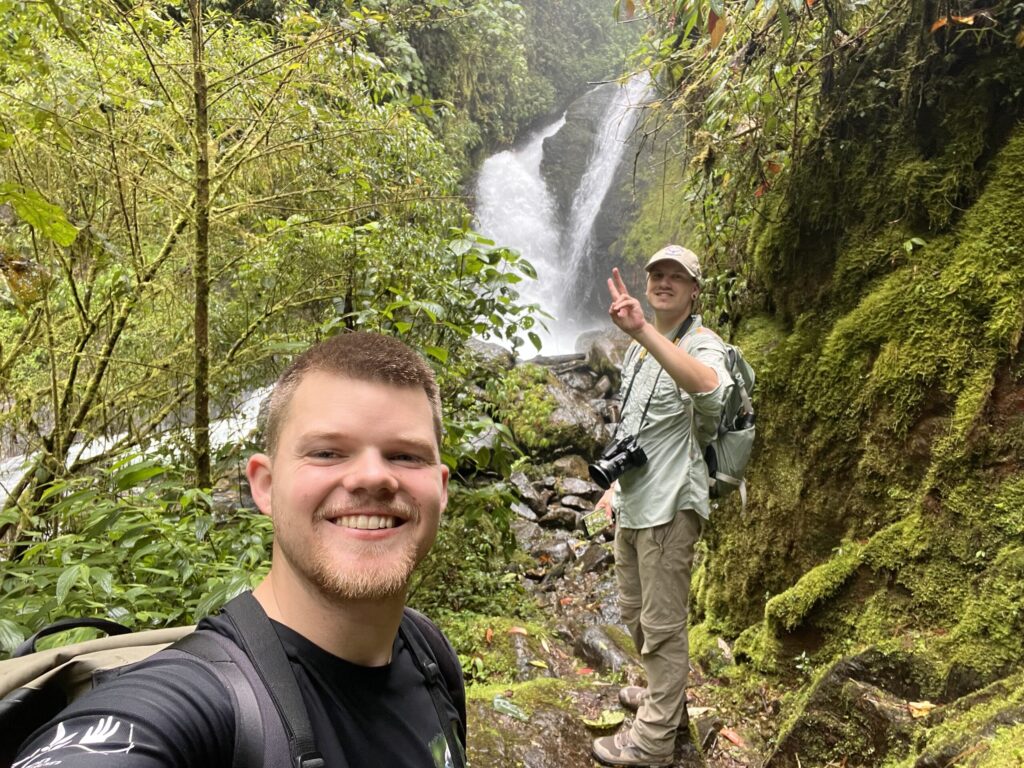
Maarten’s study identified 124 species of frugivorous birds belonging to 22 families and revealed several interesting patterns. Naturally regenerated forests currently support the highest number of fruit-eating bird species, while planted forests also show strong potential to develop similarly diverse communities as they mature. At the same time, the study found a decline over the study period in the number of frugivorous species recorded during surveys, as well as in the proportion of specialist species. These findings highlight the complexity of forest recovery and the importance of continuing to monitor how bird communities respond to changes in regenerating forests.
Fruit-eating birds can provide valuable information about the ecological development of a forest. Different bird species depend on different types of habitat and food resources, and their presence can reflect changes in vegetation structure, fruit availability, and overall habitat quality. Because birds can respond relatively quickly to changes in their environment, monitoring their communities over time can help us understand whether recovering forests are becoming increasingly suitable for a wider range of wildlife.
One of the most important messages from Maarten’s research is the need for continued, long-term monitoring. A forest can take decades to recover, and several years of observations cannot tell us the whole story. Continuing our bird surveys will allow future researchers to determine whether the patterns Maarten observed represent temporary changes or are part of longer-term trends. Combining bird observations with information about vegetation, fruit availability, and environmental conditions could also help us better understand what is driving these changes.
Our bird surveys have been carried out at permanent monitoring stations since 2016 by Cloudbridge staff, interns, and students. Every survey adds another piece to the long-term picture, making it possible for future researchers to look beyond a single season or year and identify changes that would otherwise be difficult to detect.
This is why we are especially grateful to have students like Maarten come to Cloudbridge. Research interns bring new questions, ideas, and skills, while also helping us make use of the valuable information that has been collected at the reserve over many years. Their work becomes part of a much larger, ongoing effort to understand how our forests and wildlife are changing.
As Cloudbridge moves from decades of active reforestation toward a greater focus on protecting, monitoring, and understanding the forests we have restored, this kind of research is becoming increasingly important. The trees planted over the past two decades are now part of a living and changing ecosystem, and long-term research helps us understand what happens next.
We are proud to provide a place where students can carry out meaningful research while contributing to our long-term conservation efforts. Studies like Maarten’s help transform years of observations into knowledge that can guide future monitoring and conservation, and we look forward to welcoming many more researchers in the years ahead.
If you would like to learn more about Maarten’s research, you can download his complete report here. You can also find other research reports and studies conducted at Cloudbridge in our online publications library: https://www.cloudbridge.org/publications/reports/