
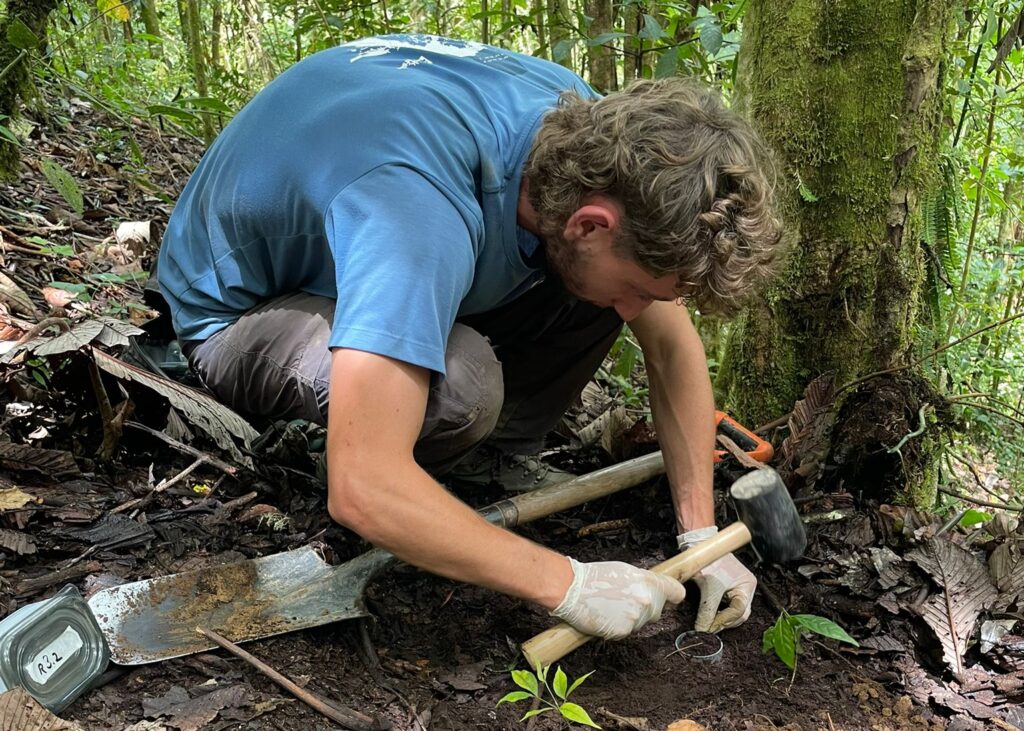
When we think about forests, we usually think about trees, birds, mammals, orchids, or streams. But there is another world beneath our feet that is just as important—and one that is often overlooked: the soil.
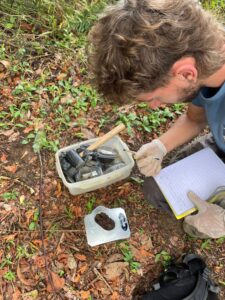
This year, we were very happy to welcome Sebastiaan de Kraker, a student from Wageningen University in the Netherlands, to Cloudbridge. During his research internship, Sebastiaan investigated how soil changes as former pastureland recovers into forest, and whether soil characteristics can help us understand the progress of restoration. He compared four different environments at Cloudbridge: pasture, reforested forest, naturally regenerating forest, and old-growth forest, looking at soil density and moisture, pH, earthworms, and other organisms living in the soil.
Why is this important? Soil is much more than dirt. It is a living part of the ecosystem that supports plants and countless organisms while influencing how water, nutrients and carbon move through the forest. In a cloud forest, healthy soil is particularly important because it helps water move into and through the ground, reducing runoff and supporting the forest’s ability to regulate water.
One of the clearest findings of Sebastiaan’s research was that soil became less compact as the land recovered. Pasture had the most compact soil, while naturally regenerating and old-growth forest had the least. Less compact soil can allow water to infiltrate more easily, supporting important hydrological functions of the forest.
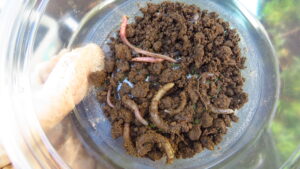
The study also produced some unexpected results. Earthworms were much more abundant in pasture and reforested areas than in naturally regenerating and old-growth forest. This does not mean that these areas had healthier soils. Instead, it highlights how complex ecosystems are and why no single measurement can tell us everything about restoration. Earthworm populations can be influenced by vegetation, organic matter, and the history of the land, making them useful for understanding changes in land use but not necessarily as a simple measure of forest recovery.
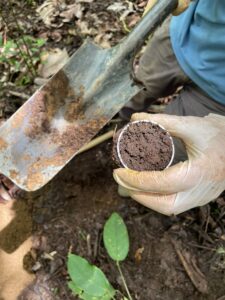
Perhaps most interestingly, the naturally regenerating forest had soil characteristics similar to old-growth forest, while actively reforested areas still had more compact soil despite more than two decades of restoration. This suggests that different parts of an ecosystem recover at different speeds and that looking at the trees alone does not tell us the whole story of how a forest is recovering.
Soils may not receive as much attention as the plants and animals we can easily see, but research like Sebastiaan’s reminds us that a healthy forest depends on what is happening below the surface as much as above it. We are especially grateful to have students like Sebastiaan come to Cloudbridge and bring their curiosity, knowledge, and enthusiasm to the reserve. Their research helps us understand our forest from new perspectives and adds valuable information about how cloud forest ecosystems recover.
Sebastiaan’s full research report, Evaluating Soil Health Indicators across a Restoration Gradient in Montane Cloud Forests in the Cordillera de Talamanca, Costa Rica, can be found in the Reports section of our website:
https://www.cloudbridge.org/publications/reports/
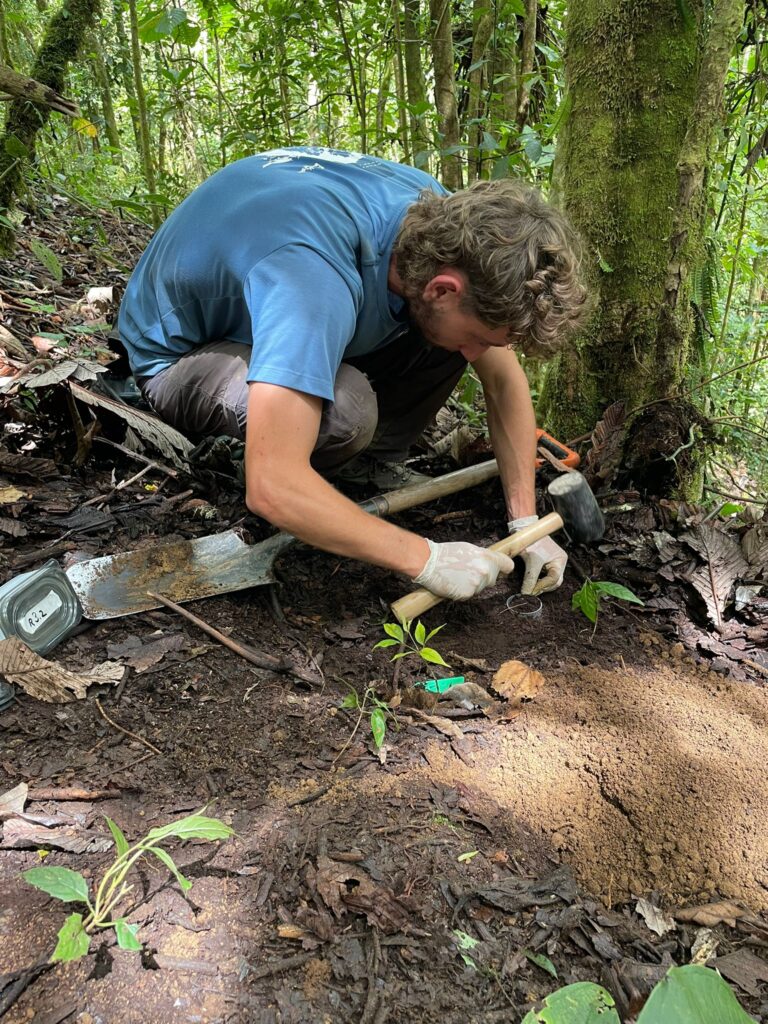
Thanks for this important research Sebastiaan. It seems there is always something new and surprising to learn about ecology,