

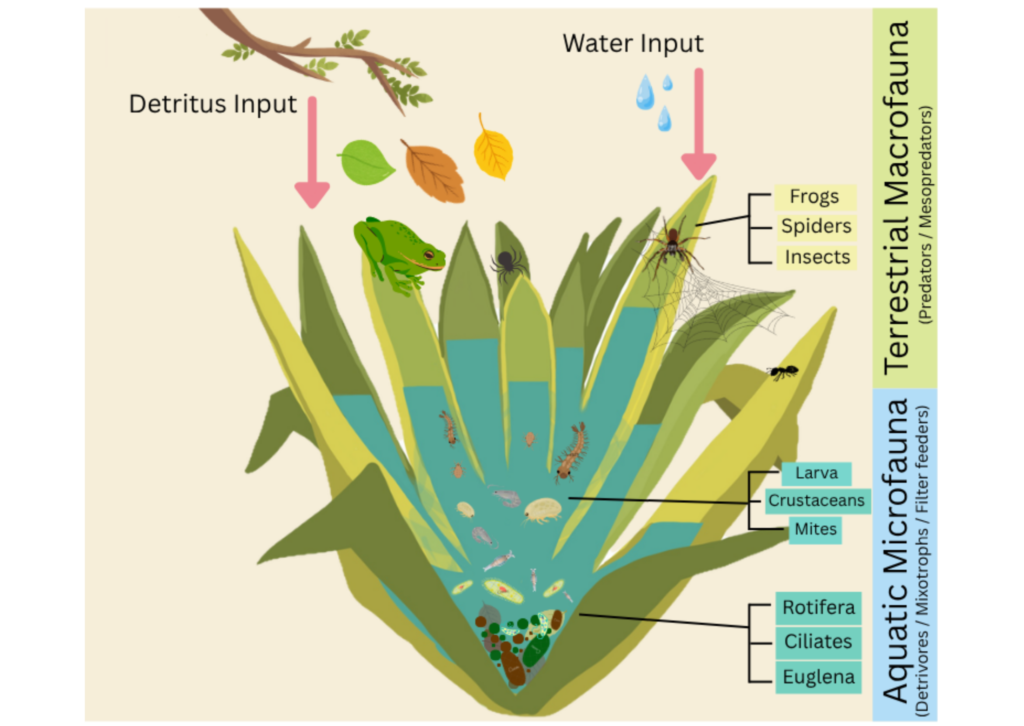
Bromeliads are an important part of the cloud forest ecosystem. Their overlapping leaves collect and retain rainwater, creating small aquatic habitats known as phytotelmata. These miniature ecosystems provide shelter and resources for a wide variety of organisms that depend on them, from microscopic life to small aquatic invertebrates. Yet, much of the biodiversity hidden within these plants remains poorly understood.
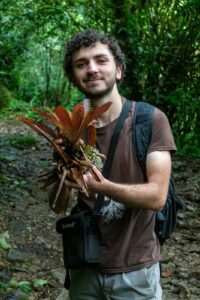
To explore these hidden communities, Jeremy Madden conducted a study at Cloudbridge Nature Reserve between June and October 2025. He sampled 100 bromeliads along trails across different areas and elevations of the reserve. For each plant, he recorded environmental characteristics such as elevation, water temperature, leaf size, water volume and canopy cover. He then carefully collected water and accumulated organic material from the plants, taking the samples back to the laboratory for microscopic examination.
The results revealed an impressive diversity of life. Across the 100 bromeliads, Jeremy recorded 128,789 individual organisms belonging to 20 identifiable morphological groups. Motile ciliates accounted for approximately 54% of all recorded organisms, while Euglena represented around 37%. Together, these two groups made up roughly 91% of the total count. The samples also contained rotifers, nematodes, copepods, insect larvae and mites, as well as a small number of tardigrades. At least ten distinct morphological forms of ciliates were observed, suggesting that further identification methods could reveal even greater diversity.
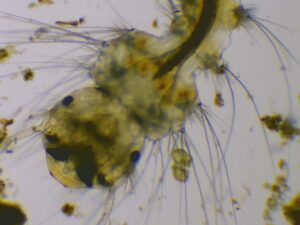
By comparing samples from different elevations and habitats, Jeremy investigated whether environmental conditions influenced the composition of these communities. Elevation emerged as the clearest environmental gradient, while water temperature, leaf area and water volume also showed associations with the organisms present. One particularly interesting finding concerned ostracods, tiny aquatic crustaceans found in 12 of the 100 bromeliads. All were recorded in plants at elevations of 1,951 metres or higher, and none were found in the 64 sampled bromeliads below that elevation. They were also more frequently associated with larger leaves and cooler water. Although further research is needed to understand these patterns, they offer promising questions for future studies.
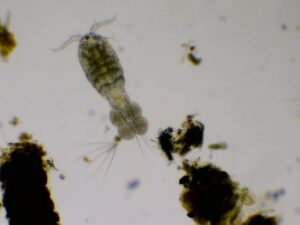
This research provides the first characterization of bromeliad phytotelm microfauna in Costa Rica’s Talamanca Mountains and highlights how much biodiversity can be found in these small, water-filled habitats. While the study focused on accessible plants sampled during the rainy season, future research could explore seasonal changes, additional elevations and the use of DNA-based methods to identify organisms more precisely.
Understanding these miniature ecosystems helps us appreciate the many roles bromeliads play in the cloud forest. By retaining water and
providing habitat for species that depend on them, they contribute to the complexity and biodiversity of the forest. At Cloudbridge, research such as Jeremy’s helps us better understand the ecosystems we work to protect, reminding us that some of the most important discoveries can be found in the smallest places.
You can download the full research report from the Cloudbridge Nature Reserve website at Publications and Reports.