
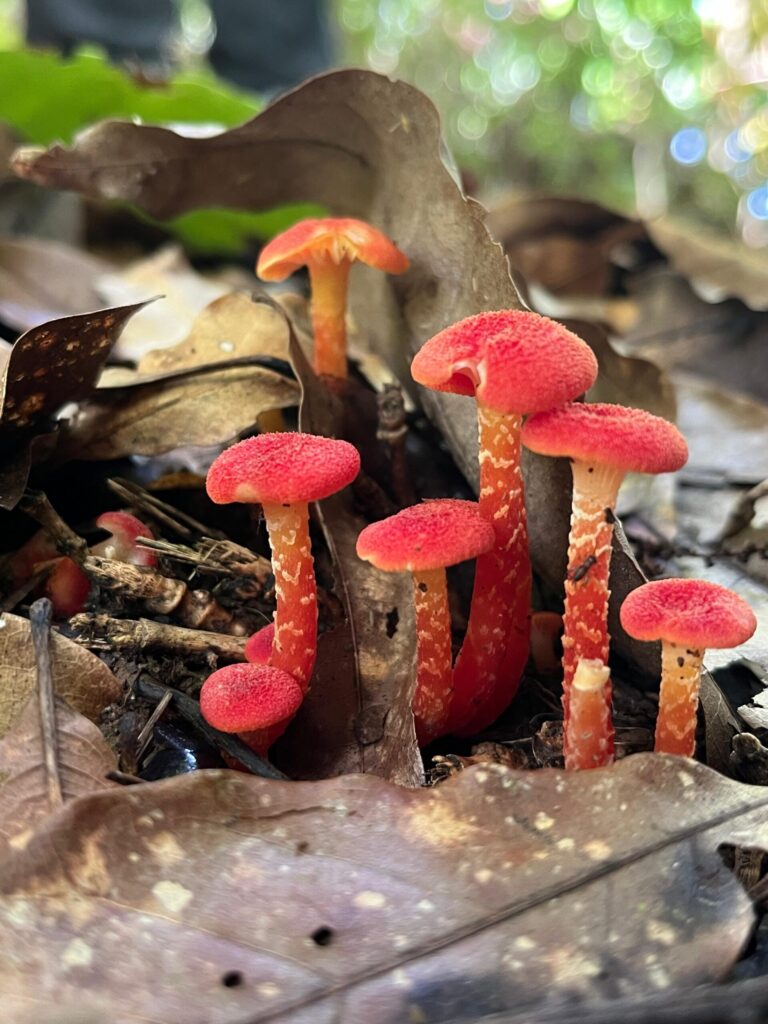
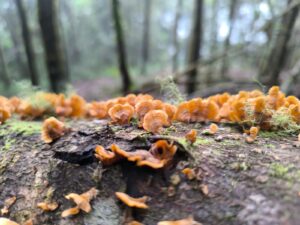
As we approach the end of the wet season in Costa Rica, the forest is as green and humid as it gets. The ground is damp, fallen leaves are decomposing, and fungi are emerging throughout the forest, making this a wonderful time to discover and document their diversity. It is also the perfect moment for Costa Rica’s first National Fungus Count, a citizen science initiative running throughout November that invites people across the country to photograph and record the macrofungi they encounter.
Although we often think of fungi as the mushrooms we see growing on the forest floor or on fallen logs, these visible structures are only part of the story. The mushroom is the reproductive structure of a fungus; most of the organism lives out of sight, forming a network of fine filaments called mycelium within the soil, wood, or other organic material. This hidden network can persist long after the visible mushroom disappears, quietly playing an essential role in decomposing organic matter and recycling nutrients. The wet season provides ideal conditions for many fungi to produce these visible structures, giving us a glimpse of the remarkable diversity that exists beneath the forest’s surface.
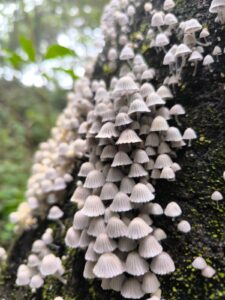
Despite their importance to healthy ecosystems, fungi remain less studied than many plants and animals. Documenting their diversity across an entire country is a considerable task, which is why citizen science is so valuable. By bringing together observations from people in different locations, researchers can build a broader picture of fungal diversity and distribution, establish a baseline for future comparisons, and investigate how fungal communities may change over time, including in response to climate change.
Coordinated by our neighbours at Reserva Aurora, the First National Fungus Count runs from November 1 to 30. Anyone can participate, regardless of their scientific knowledge or experience identifying fungi. If you are currently in Costa Rica, simply photograph the fungi you encounter and upload your observations to iNaturalist / Naturalista Costa Rica. You don’t need to identify the species yourself; clear photographs and accurate location information are already valuable contributions. Remember to leave fungi undisturbed in their natural surroundings.
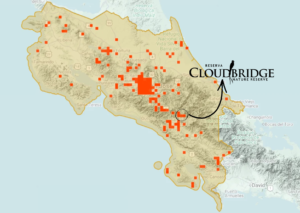
Here at Cloudbridge Nature Reserve, we have already started uploading our own observations and will continue documenting the fungi we encounter throughout the rest of November. Our cloud forest offers plenty of opportunities to discover fungi growing among fallen leaves, on decaying wood, and across a variety of forest habitats. By sharing these observations, we can contribute to a nationwide effort while encouraging our visitors to look more closely at this often-overlooked part of forest biodiversity.
At the time of writing, the project has already gathered 800 observations from 154 contributors — and we’re only halfway through the count! Whether you live in Costa Rica or are visiting for a few days, we encourage you to contribute. Visit the I National Fungus Count project on iNaturalist to explore the observations already recorded, discover the different fungi found across the country, and contribute your own before the end of November. Next time you walk through the forest, take a closer look at the ground beneath your feet or the fallen branches along the trail. You might discover something fascinating and help scientists learn more about the hidden diversity of Costa Rica’s forests.
Every observation counts. See you in the forest!