
Forest Is Returning to the Chirripó Landscape. And We Are Part of That Story
A new scientific study by Luis Diego Rodríguez-Bonilla and Adolfo Quesada-Román, published in the Journal for Nature Conservation, examines how the Chirripó Pacífico catchment has changed over the past 33 years. Using satellite imagery and geographic information systems, the authors analyzed land use transitions between 1986 and 2019 in the watershed surrounding Chirripó National Park. Their findings tell an encouraging story. After decades of agricultural expansion, the forest is steadily returning.
In the late 1980s and 1990s, pasture and agriculture, particularly cattle ranching and coffee production, expanded across parts of the western catchment, reducing forest cover and fragmenting the landscape. However, beginning in the late 1990s, this trend reversed. Environmental legislation, protected area consolidation, incentive programs such as Payments for Ecosystem Services, and broader economic shifts reduced pressure on marginal lands. As steep and erosion prone pastures were gradually abandoned, natural regeneration began to reclaim them. Over the full study period, dense forest cover increased by 6.1 percent, with more than 1,500 hectares transitioning from pasture or agriculture back to forest. The strongest gains occurred near protected area boundaries, demonstrating how conservation policy and local land use change can reinforce each other.
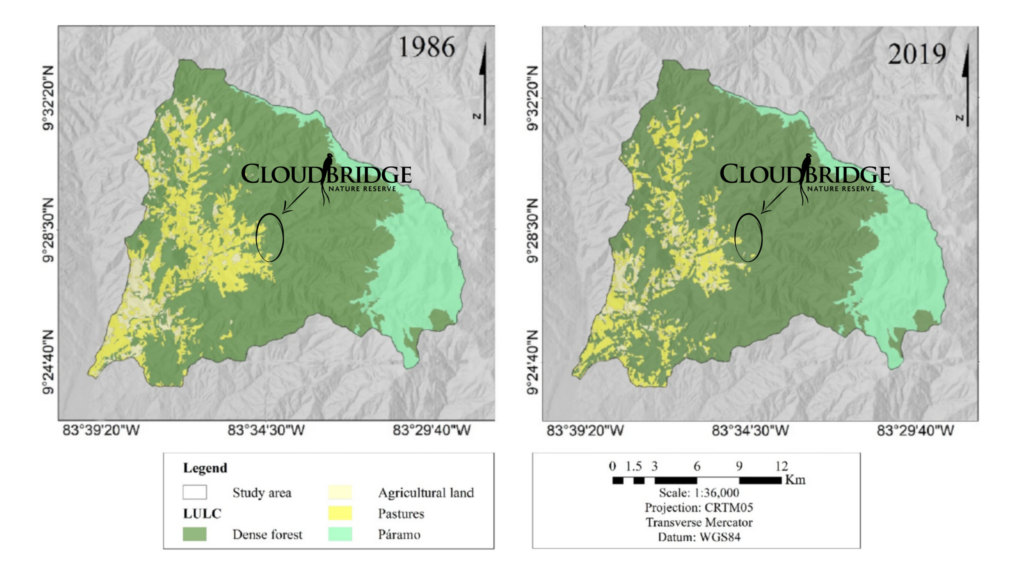
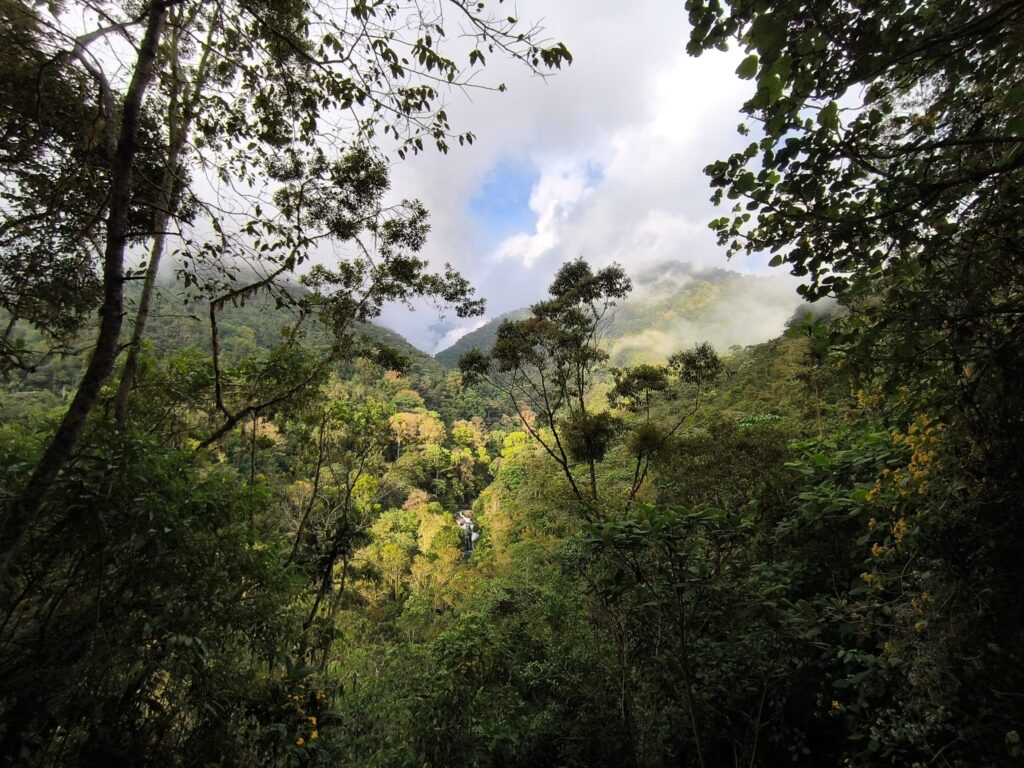
This regional recovery is directly reflected in what has been happening at Cloudbridge. Much of the land that now forms our reserve was once open cattle pasture on steep slopes, similar to the areas identified in the study. Over the past two decades, we have facilitated both natural regeneration and active restoration, planting native species while protecting recovering areas from further disturbance. Today, what was once degraded pasture is covered in regenerating forest that strengthens connectivity with Chirripó National Park and functions as a biological buffer zone for the park.
It is important to recognize that most of the forest now growing at Cloudbridge, and much of the forest gain documented in the study, is secondary forest. These ecosystems are resilient and full of life, but they are still in the process of rebuilding. Tropical montane forest succession unfolds over decades, even centuries. Secondary forest needs time, patience, and consistent protection to develop the structural complexity, soil systems, and biodiversity associated with primary forest. By safeguarding these regenerating areas, we are investing in a long term ecological process that will continue well beyond a single generation.
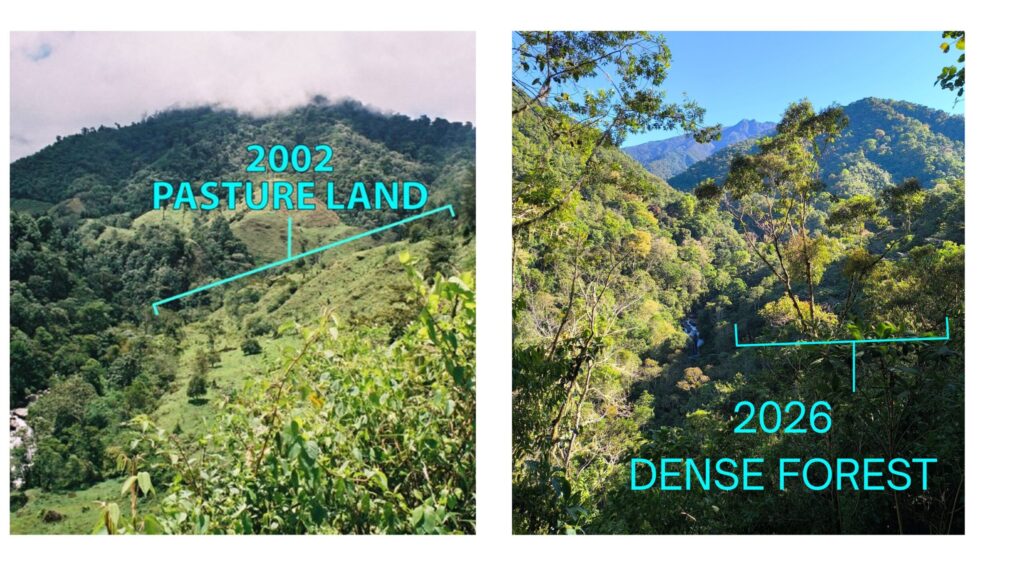
The 6.1 percent increase in forest cover identified by Rodríguez-Bonilla and Quesada-Román represents more than numbers on a map. It reflects real hillsides recovering, real watersheds stabilizing, and real habitat expanding. At Cloudbridge, we are part of that measurable transformation, helping convert former pasture into forest that protects slopes, stores carbon, and supports wildlife. If you would like to contribute to this ongoing recovery, you can support our restoration and protection efforts through a donation or by joining us directly in the field as a volunteer, becoming part of the hands on work that allows secondary forest to continue growing toward the mature cloud forest it once was.
For those interested in exploring the research in detail, the full article by Luis Diego Rodríguez-Bonilla and Adolfo Quesada-Román is available here.