
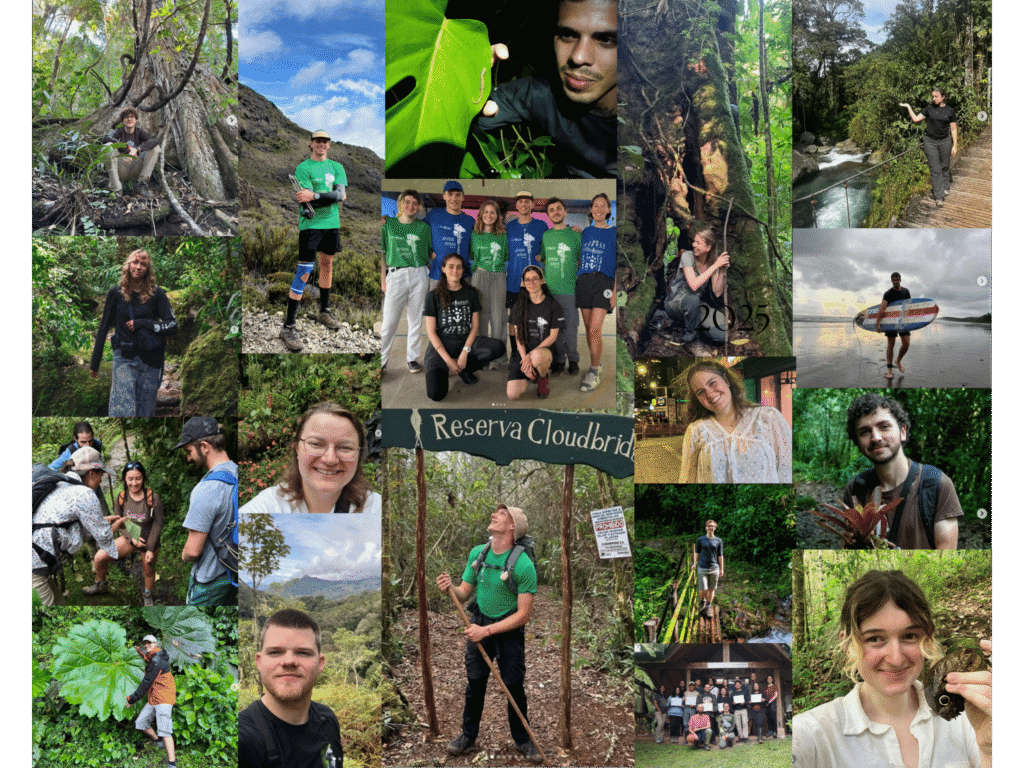
As 2025 comes to a close, we would like to reflect on a remarkable year of research, learning, and collaboration at Cloudbridge Nature Reserve. Over the past twelve months, nearly 80 researchers, interns, and volunteers worked alongside our team, helping turn the reserve into a living laboratory and deepening our understanding of the cloud forest—an ecosystem that continues to surprise us with how much remains unknown.
One of the most impactful projects this year was our camera trap program, which allowed us to learn more about some of the forest’s most elusive inhabitants. Thanks to this long-term monitoring effort, we captured rare records of wildlife that is seldom seen on the trails, including wild cats and other secretive mammals. These observations are helping us better understand species presence, behavior, and habitat use, and they are laying the groundwork for continued wildlife monitoring in the years to come.
Individual of jaguar (Panthera onca) detected in one of our trails thanks to the camera trap project.
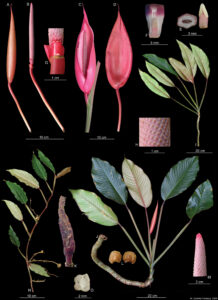
Research in 2025 also focused on the vegetation of the cloud forest, providing new insights into forest structure, regeneration, and plant diversity. Through this work, researchers documented patterns that ultimately led to the discovery of a previously undescribed plant species, a powerful reminder that even in protected areas, much of the cloud forest’s biodiversity has yet to be fully understood.
Beyond plants and animals visible to the naked eye, also a project explored the hidden ecosystems within the forest itself. Studying bromeliads, which revealed the complex communities of microorganisms and invertebrates living inside their water-filled tanks, showing how a single plant can support an entire miniature ecosystem. This research highlighted the importance of looking beyond traditional study subjects to understand biodiversity at all scales.
This year also marked the beginning of a new collaboration focused on bats, a group that remains largely understudied in cloud forest environments. By recording echolocation calls and identifying species present in the reserve, we have taken the first steps toward establishing a long-term bat research project that will help us better understand their ecological role at Cloudbridge.
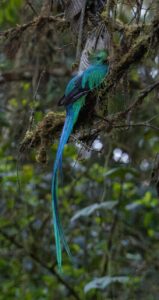
In addition to these projects, we welcomed researchers working on birds, moths, butterflies, soils, and other key components of the ecosystem. We conducted two field courses and hosted more than 20 student groups, offering hands-on learning experiences that connected participants directly with cloud forest conservation and research..
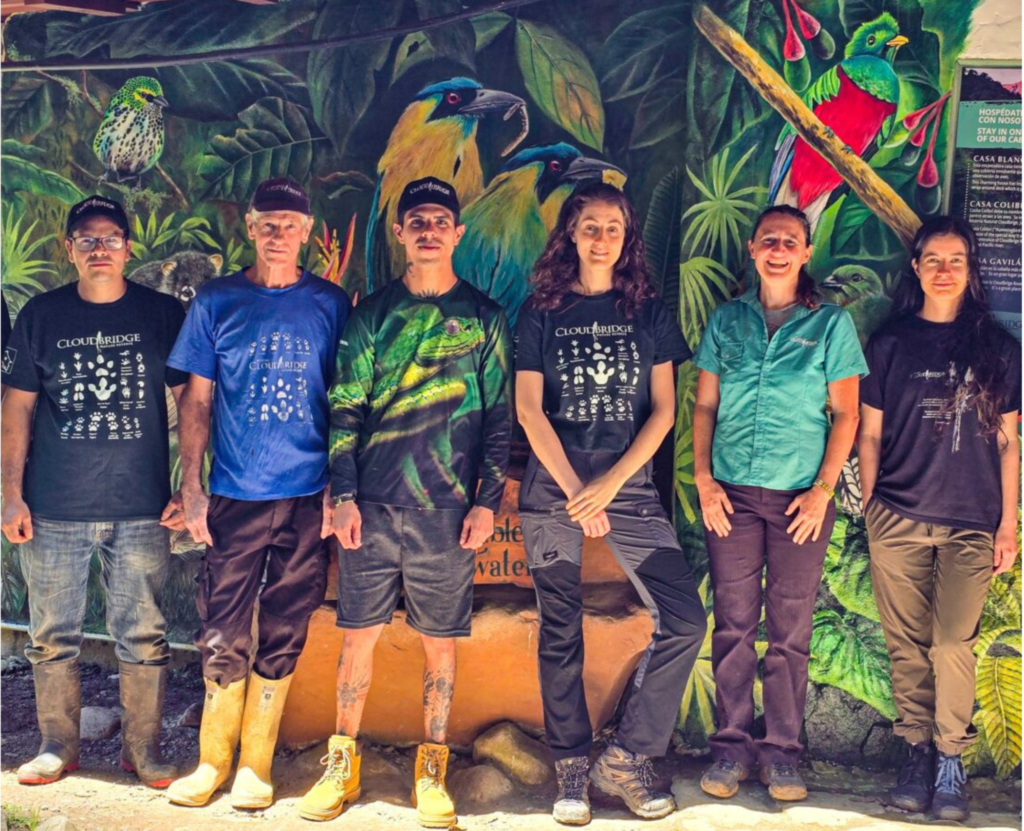
None of this would have been possible without the people who believe in Cloudbridge. Our deepest thanks go to all the donors, volunteers, interns, researchers, course participants, and day visitors whose support makes this work possible. We are committed to making this knowledge accessible, and all of our research is published on our website. We invite you to explore past reports and keep an eye out for future publications at https://www.cloudbridge.org/publications/reports/.
As we move into the holiday season, we wish you happy holidays and a very happy New Year, and we hope to welcome many of you back to the reserve in 2026. In the meantime, we will continue working to conserve the beauty of the cloud forest and to learn more about it through research—because understanding this ecosystem is essential to protecting it.
Wonderful! I am so impressed with all the research happening at Cloudbridge.